Hi Everybody!
The next fynbos ID course will be run at Kirstenbosch 2-6 April 2012. Click here for information fynbos plant ID workshop April 2012Please email me if you want to register or find out more
Regards
Wendy







Hi Everybody!
The next fynbos ID course will be run at Kirstenbosch 2-6 April 2012. Click here for information fynbos plant ID workshop April 2012Please email me if you want to register or find out more
Regards
Wendy
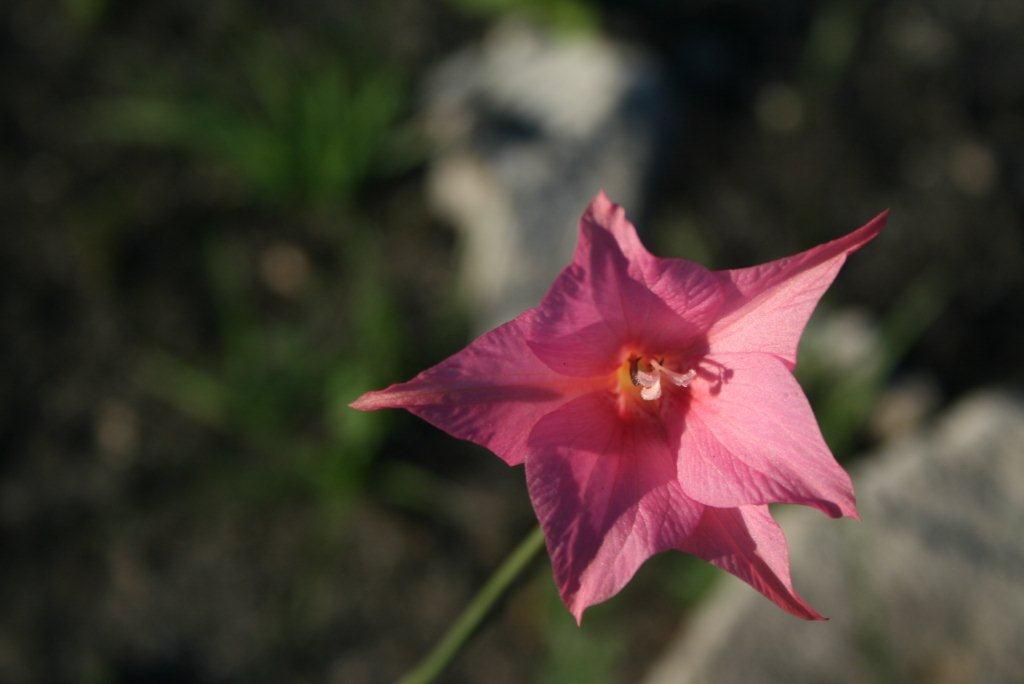
Yesterday evening at about half past six I was out mountain biking and as I headed down a steep hill on Lomond, with the beautiful Kraaibosch dam below, a flash of red caught my eye. Having made a sudden stop and heaved my way back up the hill, I came across this beauty….


The flowers of Cyrtanthus carneus can grow to as high as 1m tall. They flower at the driest time of the year, growing from food stored by the plant in its underground bulb. This species of Cyrtanthus grows in coastal areas between Kleinmond and Mossel Bay and has been classified as Near threatened in the latest Red Data assessment of SA plants. The site where I found it was an area recently cleared of alien vegetation by Lomond staff.
Its great to know that this species is safe and flourishing on Lomond within the Walker Bay Fynbos Conservancy (www.fynbos.co.za).
Subject: CapeNature Stewardship Position in the Overberg closing date 29 February
Importance: High
Dear Stewardship Colleagues
Please see the attached Stewardship position in the Overberg and distribute widely please, closing date is the 29 February.
CSO stewardship Overberg Closing date 29 Feb2012 (2)
Kind Regards
Kerry
| Kerry Purnell
Programme Manager | Biodiversity Stewardship Programme |
Dear Fynbos Forum Friends
NEW FYNBOS FORUM SECRETARIAT:
I would like to introduce you to Sandy Dowling, new Fynbos Forum Secretariat. Her email is: info@fynbosforum.co.za
I am about to retire, and Sandy has been appointed to replace me. Welcome Sandy to the Fynbos Forum (Friends!).
DATES FOR NEXT FYNBOS FORUM 2012:
A friendly reminder that Fynbos Forum will be help at Cape St Francis from 17th to 19th July 2012. (Actually its best to book in on 16th and then leave morning of 20th). Documentation to be circulated very very soon!
EMAILS:
The new Fynbos Forum email address is about to go live, so please send your enquires to Sandy on info@fynbosforum.co.za
I will circulate emails that have been sent for distribution receive up till end of today (Monday 6th February)
THANKS:
Its been great getting to meet you all , even its just been by email! Thank you all for your friendship over these years. We have learnt a lot, and had lots of fun along the way too. I trust you will support Sandy and the Fynbos Forum equally as you have done these last 11 (actually 10 + Interfaces) Fynbos Forums.
I would also like to thank SANBI who have hosted our email service as well as the secretariat these last two years.
I would also like to extend a HUGE BIG thanks to the Botanical Society who hosted the secretariat for many years, and also all the funding. Their support and help contributed greatly to the running of the Fynbos Forum.
Keep up the great conservation work – and you never know when I will pop up somewhere to visit you. I will be helping organize The Arid Zone Ecology Forum for another year or two. (azef.sa@gmail.com)
Wishing you all the best for 2012 and your futures.
Warm regards
Wendy Paisley
I recently completed a large fynbos landscaping and rehabilitation project at the new Oudebos Cabins tourism development in Cape Nature’s Kogelberg Nature Reserve. Part of the project involved developing 12 roof gardens on the new cabins and meeting room. While I have installed roof gardens in the past on traditional level concrete structures, the Oudebos Cabins provided some unique challenges as the buildings are made entirely of wood, and half of each unit has a steep pitched roof.
Together with project architect Justin Cooke and Marijke Honig of Think Ecologic cc we designed wooden frames that fitted on top of the roofs to hold the soil. We were limited to 150mm depth for these frames owing to the limited carrying strength of the underlying wooden building. The roofs and frames were first waterproofed using berbigum waterproofing.

Once the wood had been waterproofed we installed Dorkin, which is like large sheets of glorified cookie cups that aid drainage and also retain some water for uptake by fine roots.  The Dorkin was then covered with biddum geofabric. Because we had very little soil to work with we added a layer of Coir woven geotextile and approximately 15% of the soil mix was made up of Coir pith /peat blocks added to the soil mix (both sourced from the Coir Institute). Local soil from the site was mixed with the coir, which also inlcuded 40% fine compost from Agri-organics.


The mixing of the soil mix and lifting onto the roofs was done by machine, which greatly sped up the process. I had learnt the hard way on a previous roof garden project where we lifted the soil using ropes and buckets!

We kept some of the coir pith blocks out of the soil mix and used them to create a 30mm peat layer on top of the coir woven geotextile before raking the soil mix up to height of the the 150mm wooden frames.

The picture to the right shows the soil mix about to be added on top of the coir geotextile and coir pith layer.
Once the mix had been levelled we covered the soil with Biojute which is a coarse, biodegradable fabric woven into a open mesh from rugged heavy jute yarn. This was sourced from Maccaferri and holds the soil in place while the plants establisih. It will eventually break down by which time the plants roots will hold the soil in place.
A drip irrigation system was then laid with lines 300mm apart and drip points also 300mm apart. The final step was then the planting. I worked on 9 plants per square meter.  We selected a range of succulents and grasses. Most of the fillling plants were made up of a local Erepsia (E. anceps sourced from the site) and Aristida junciformis which grows naturally in the Kogelberg, and has proven itself to me previously as an excellent roof garden plant.
While we have had some unplanned for challenges including the emergence of weeds and grasses (because of using soil from the site), and water supply issues resulting in mortality of some grasses and succulents, the gardens are establsihning well and we are expecting full coverage by next summer.
Please would you assist us by distributing this advertisement for a Regional Ecologist for Cape Nature. Regional Ecologist 10 Feb 2012
Thanks
Ernst
| Dr Ernst Baard
Senior Manager | Scientific Services |
| tel +27 21 866 8001 | fax +27 21 866 1523/086 528 9689 | cell +27 082 414 0424
email ebaard@capenature.co.za | postal Private Bag x5014 Stellenbosch 7599 physical Assegaaibosch Nature Reserve Jonkershoek Road Stellenbosch |
Anyone interested in learning a LOT about fynbos and having a great time doing it then contact Eugene Moll at emoll@telkomsa.net . Prof. Moll’s Bot 3c field courses were legendary in the UCT Botany Department.
MESSAGE FROM EUGENE MOLL
I have been toying with the idea of running a five day short course (that I may “get on the books at UWC” – so it could be for some credits in 2013/2014 for anyone interested) in fynbos vegetation ecology and sampling. This would be partly based on the successful Botany 3c and later BOT305F field courses I ran from 1982 to 1992 at Bains Kloof (though the first one was at Cape Point in the old Skaife house at Olifantsbos). For those more seriously interested it may be that you will have to write and essay or two and do a mini project if this is for university credit – time alone will tell on that one. Otherwise the course will be for fun and information.
My vision at the moment is to have a minimum of 10 and a maximum of 25 participants with the first day in Afromontane Forest on the Peninsula on the Monday (bring your own lunch), followed by looking at Strandveld (now some form of “Subtropical Thicket”) near Melkbosch from 08h00 on Tuesday (again bring your own lunch), and then going to the Renosterveld at the geometric tortoise reserve – with that night and the following nights at Bains Kloof (4 nights). Here accommodation can be “Spartan” (and therefore cheaper in Stone Mansion – the UCT house) or in some of the village units. On Wednesday we would go to the Desert Botanic Gardens at Worcester to investigate the Succulent Karoo, and on Thursday look at some of the Mountain Fynbos communities round Bain Kloof at Eerstetol. Evenings would be for some analysis and post mortems.
Transport would be in your own vehicle (or sharing with others doing the course). For food I propose doing much what we did in the past with breakfast cereals and toast; lunch bread, cheese and tomato; and supper a stew/braai and Friday night bash when I will cook legs of lamb in coke outside in my large 3-legged pot (and partners – with some consideration of cost) would be welcome to join us for the last night’s “festivities”.
Course content would be aimed at collecting some plot data on species area, vegetation structure and floristics, life forms and regeneration strategies that relate to species survival, and anything else that we may wish to do (within reason). The eventual aim is to consider how the five major vegetation types in the Fynbos Biome relate to each other floristically and structurally/functionally by crudely analysing the data we gather – and to a good time while doing all of this. For those seriously interested in fynbos sensu lato I can provide a reading list, etc. So you can either participate because you want to simply be better informed, or because you are seriously interested in all this floristic/ecological and therefore management stuff.
I am looking at doing the first course in August 2012.
Finally costs would need to be MUCH more carefully calculated but for the “Spartan” version it would be in the order of R1,000/p and for the “luxury” version ~R1,600/p (partners would be in the order of R100 for Spartan and more for luxury – including a roast dinner on Friday evening and breakfast).
Any comments and expressions of interest to me please…
Eugene
This morning I was walking through a fynbos patch near Uilkraalsmond, east of Gansbaai. It has been a very hot and dry few months in the Cape, the veld is looking decidedly drab and dry, and I was not expecting to see much in the way of flowers. Then a splash of color caught my eye and on closer inspection I found a patch of these beautiful Stoebe capitata.

If you look closely you will see that the flower head is made up of hundreds of delicate star-shapes mauve to pink florets. This characteristic of flower heads containing many individual small flowers, or florets, is typical of the family Asteraceae (the daisy family).
Stoebe capitata flowers through the height of summer (December to March) and grows on sandstone slopes and coastal forelands in the southwestern and Eastern Cape.
It may be the middle of the summer in the Cape but there are still some floral treats to be enjoyed in the fynbos. I took a walk over the weekend on Witkransberg and ca me across these beautiful Watsonia schlechteri.
This species grows singly or in small clumps on rocky exposed slopes between Ceres and the Kouga mountains. The bright red-orange flowers are usually stimulated by fire but plants can also bloom in mature veld povided it is not taller than about 60 cm.
Another species floweing at the moment is Caesia contorta. 
This is a relatively common bulbous plant with small nodding blue flowers with rough filaments striped blue and white. It is widespread on flats and slopes between Namaqualand and the Eastern Cape.
The third species found flowering along the trail was Aristea africana.  This widespread species grows from th Gifberg, which is the northern edge of the fynbos down to the Cape Peninsula and eastwards to Riversdale. It is a small evergreen and usually branched perennial with flattened stems and linear leaves. It has blue flowers that tend to be difficult to photograph as they often turn out purple on the image. It has translucent spathes with dark keels that are finely fringed and sometimes rusty brown at the tips.
These were just three of the plants flowering in early January. There were many more including Staavia radiata (altydbos), the daisies Ursinia tenuifolia and Stoebe capitata, the yellow lobelia (Monopsis lutea) and Roella incurva. All these plants flowering at the hottest and driest time of the year – proving again how well adapated fynbos species are to the harsh climate of the region.
Could you please distribute this to the Fynbos Forum & AZEF members.
Thanks
Annelise
Annelise le Roux
Scientist: Botanist | Scientific Services
tel +27 21 866 8018 | fax +27 86 529 4963 | cell +27 82 484 6993 email aleroux@capenature.co.za | postal Private Bag x5014 Stellenbosch
7599
physical Assegaaibosch Nature Reserve, Jonkershoek, Stellenbosch, 7599 www.capenature.co.za