
Land Degradation Course 9-13 July. Register now!

Our Land Degradation Short Course is open for registrations. There are only 30 seats available, so please register asap to avoid disappointment.  You are welcome to forward this notice to your colleagues, students and friends that wish to participate in the course!

Short Courses

Rhodes University Short Course Accreditation letter («CTRL+Click to access letter)

On-line Registration form

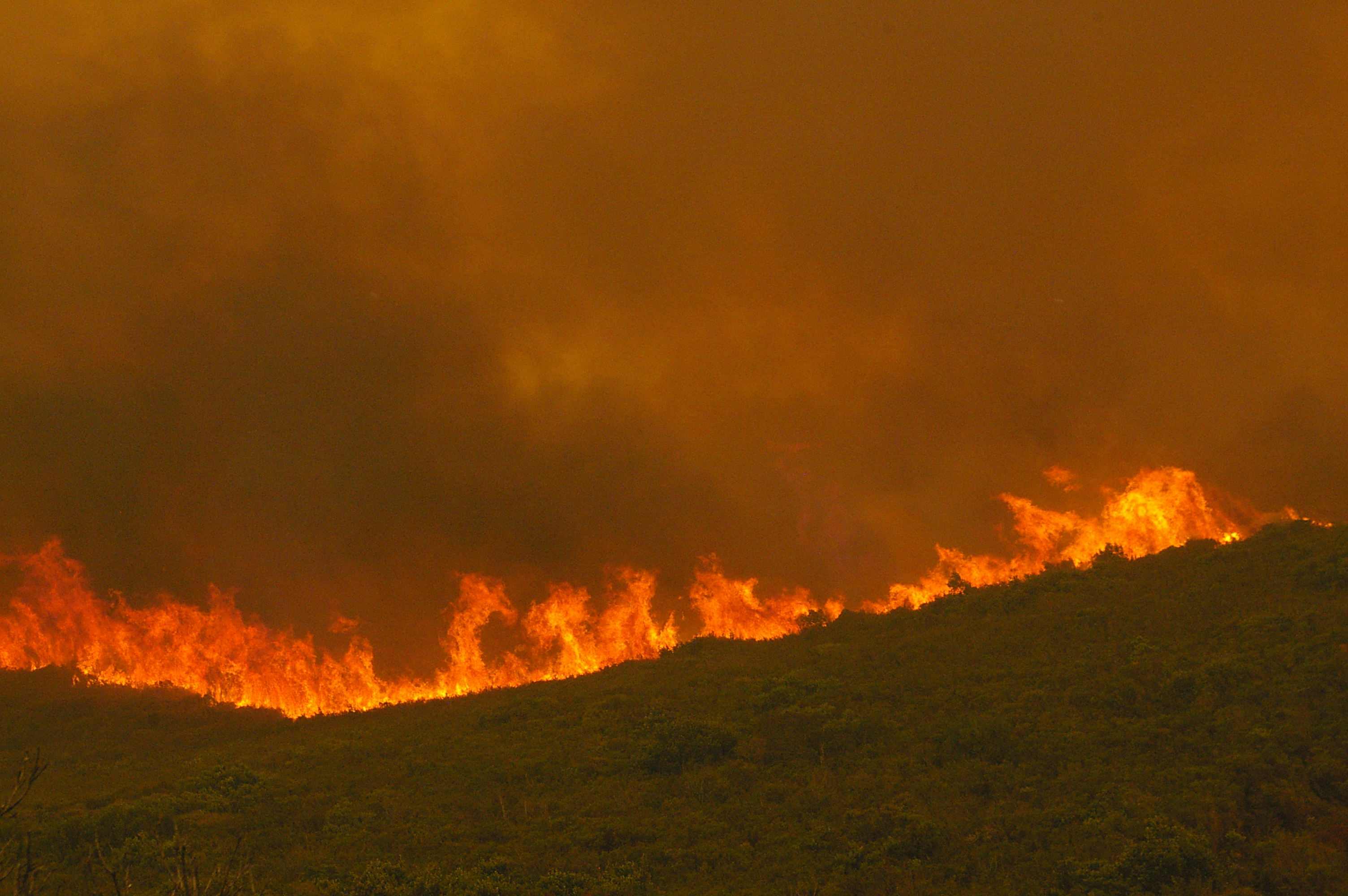
Land Degradation: 9 July – 13 July 2012

(To access brochure with registration form please CTRL+Click above link)

  • An      overview of land degradation globally and locally
  • Methods for assessing land degradation
  • Case studies on land degradation
  • An overview of rehabilitation of degraded land.
  • Participants will go on a field trip to collect data.
  • The course will be offered by experts with over 150 years of

Collective experience working on land degradation.

Community Based Natural Resource Management (CBNRM): 13 – 17 Aug 2012

(To access brochure with registration form please CTRL+Click above link)

The course will aim to support participants in:

  • Understanding the key features of CBNRM
  • Understand the role of social learning in CBNRM
  • Recognising the challenges inherent in CBNRM practice, and the wide range of capacities needed to address these challenges
    Identify the particular understandings and skills necessary for more effective CBNRM implementation
  • Understanding appropriate approaches to developing these understandings
    and skills
  • Using these approaches within the contexts of active CBNRM
    processes
  • Use case studies to analyse capacity needs for effective implementation
    of CBNRM

Tools for Wetland Assessment (TWA): 10 Sep – 14 Sep 2012

(To access brochure with registration form please CTRL+Click above link)

Learn to undertake and apply:

  • Wetland delineation
  • Assessment of wetland ecosystem services
  • Assessment of wetland health
  • Guidelines for developments and wetlands

Environmental Impact Assessment (EIA): 14 May – 18 May 2012

(To access brochure with registration form please CTRL+Click above link)

The course will introduce you to the field of environmental management by focusing on the procedures for Environmental Impact Assessment (EIA) and Integrated Environmental Management (IEM). Emphasis is therefore placed on the study of human impacts on the environment, and how to evaluate the importance of these impacts and regulate their effects, using EIA as the management tool.

For further information about any of these short courses, please contact:

Ms Zelda Kirstein, email: z.kirstein@ru.ac.za

T: 046-6037002  F:0865493095

Posted in Events and conferences | Leave a comment

A parasitic beauty of the fynbos – Mystropetalon thomii

I spent the weekend doing some training for the Freedom Challenge (www.freedomchallenge.org.za) mountain bike race across South Africa. This 2300 km adventure through some of the remotest parts of the land requires a fair bit of carrying ones bike as there are not always rideable roads or tracks. So I was in the process of heaving my bike up a particularly steep slope on the eastern side of Swartkransberg when I literally stumbled upon this population of the parasitic plant Mystropetalon thomii (the aardroos – directly translated the “earth’s rose”).

Mystropetalon thomii on www.fynboshub.co.za

The flowers you can see in the photo consist of dense spikes of red unisexual flowers, the females are on the lower part of the flowering spike and males on the upper parts. These flowers develop inside the underground part of the plant, before rupturing and surfacing. The seeds are dispersed by ants. Mystropetalon thomii on Grootbos Nature Reserve

The underground part of the plant, which looks like a tuber, is wholly parasitic on the roots of members of the Protea family, in particular Protea and Leucadendron.

These underground parts have no roots or chlorophyl but rather extract food and water from the host plant. This species is found infrequently in groups from the Hex River mountains to the Cape Peninsula and eastwards to Riversdale.


Posted in Ecology, What's flowering | Leave a comment

Call for Students and Interns to apply for funding to attend the Fynbos Forum – Deadline 26 April

Dear Fynbos Forum Participants

Fynbos Forum workshop: ‘Proteaceae: Research and Management Priorities in a Changing World”   SA-Germany Year of Science Celebration of Proteaceae

Call for Students and Interns to apply for funding to attend the Fynbos Forum 

The Fynbos Forum Committee, in collaboration with Stellenbosch University (Karen Esler), Potsdam University (Frank Schurr) and SAEON have been awarded funding under the SA-Germany Bilateral Programme (SA-Germany Year of Science Celebrations).
To this end, we will hold a workshop and special session at the Forum (17- 20 July, Cape St Francis).  The workshop title is: ‘Proteaceae: Research and Management Priorities in a Changing World” 

The purpose of the workshop is to expose South African researchers, students, land managers, conservationists, NGOs and environmental educationists to ongoing research on South African Proteaceae by German and South African collaborators and other
researchers.  The workshop will be facilitated in such a way that the implications
for biodiversity management in the context of climate change are highlighted.  In addition, land managers will be able to raise issues in management that may guide further research by the German-South African research partnership. A round table discussion will be held between South Africans and German researchers at the conclusion of the workshop to map the way forward for new research collaboration driven by needs expressed by the South African implementers of land management.  A special session on Proteaceae will be
held in addition to the workshop, and interested parties are welcome to submit
abstracts (not limited to German / SA participants).

 To this end, South African Students with an interest in Fynbos or interns are encouraged to apply to have their registration and accommodation covered to attend the workshop and participate in the Forum (13 x R1900 fellowships are available).  Limited funds are available for transport on application (shared transport of
own vehicles encouraged).  Please send a short letter of motivation to Karen Esler (KJE@sun.ac.za), preferably by the deadline below.    In addition, please include the
following information: degree/internship, name of academic institution or hosting
organisation, name of supervisor(s), title of thesis or project if applicable.  We would encourage participants to submit a paper or poster (it need not be on the Proteaceae theme).  NOTE the tight deadline for abstract submission – 26 April, 2012.


The NRF, DST and BMBF are gratefully acknowledged for their funding.

Prof Karen J Esler

Stellenbosch University

Department of Conservation Ecology & Entomology


Posted in Bursaries and job opportunities, Events and conferences | Leave a comment

What’s Flowering – Gladiolus meridionalis and Gladiolus vaginatus

Two beautiful Overberg Gladiolius species are flowering at the moment in the Overberg.

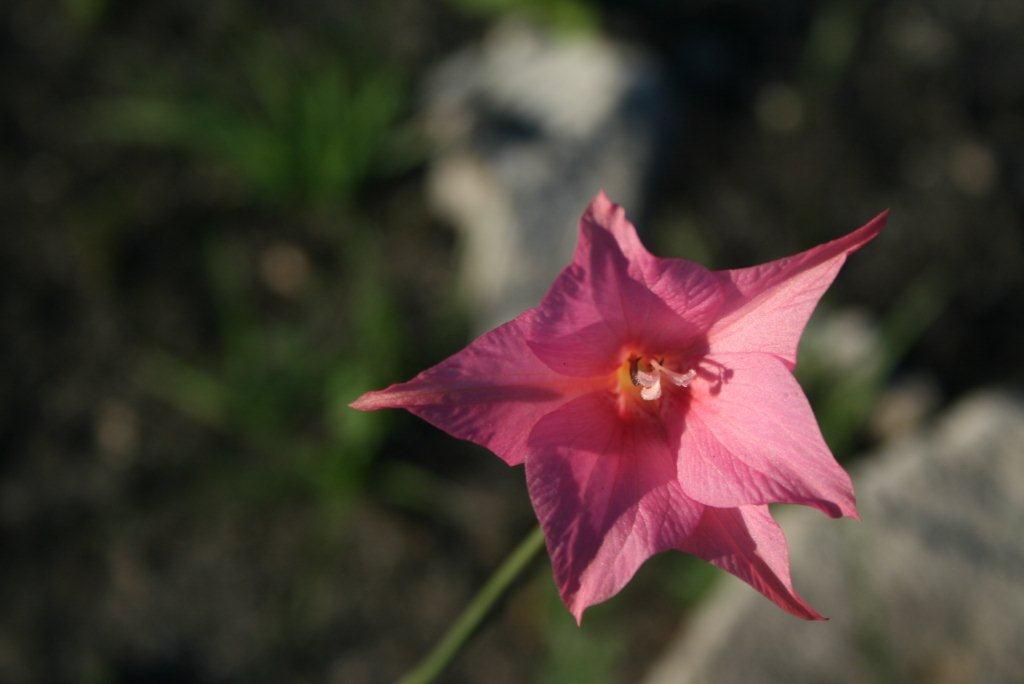
Gladiolus meridionalis has magnificent pink flowers that have long perianth tubes with wide cylindrical upper parts and large quantities of nectar, making them ideal for pollination by sunbirds. Somewhat unusual for sunbird pollination, the nectar has a relatively high sugar concentration and is sucrose dominant. The plants have three leaves, the leaf blades are slightly fleshy and without thickened margins or a visible midrib. They grow in stony sandstone soils in low fynbos on mountain slopes and flats from Gansbaai to Elim with an outlying population near Port Elizabeth.

Gladiolus meridionalis on www.fynboshub.co.zaThe second Gladiolus flowering now in mid-April is Gladiolus vaginatus. This species has been categorised as vulnerable in the latest Red Data list of South African plants. It has two leathery leaves, without visible veins and has fragrant blue to grey flowers, mostly in a 2-6 flowered spike, with dark streaks on the lower tepals. It grows on limestone and clay-loam (renosterveld) from the Cape Peninsula to Knysna.

Gladiolus vaginatus - photo Heiner Lutzeyer

Posted in What's flowering | Leave a comment

The pincushion tale

A movie about the amazing Leucospermum pattersonii

Posted in Uncategorized | Leave a comment

Fynbos field assistant needed

Field assistant needed

Hi

Please advertise for a field assistant offer, which
I  attache here

Hi Sandy,

I got the info from Karen Elser that you are now responsible for the

Fynbos Forum list.

It would be great if you could advertise my field assistant offer, which
I  attach here

Thanks a lot!

Kind regards,

Henning

Thanks a lot!

Kind regards,

Henning

Posted in Bursaries and job opportunities | Leave a comment

Call for abstracts for Fynbos Forum

Instructions to Authors Fynbos Forum 2012

Greetings!

I attach the guidelines for the submission of abstracts and posters for the Fynbos Forum of the 17th to the 19th July 2012.

Note that everyone who wants to present a paper, has to submit an abstract for consideration by the Fynbos Forum Committee by the 26th April 2012.
Poster titles have the same due date.

jpeg or pdf versions of the posters should reach us by the 3rd May 2012.

Sandy Dowling

Fynbos Forum Secretariat

Tel. +27 21 783 2509

Cell: 084 896 7182

P O Box 48395, Kommetjie 7976, Western Cape, South
Africa

Posted in Events and conferences, News | Leave a comment

What’s flowering – Gladiolus martleyi and Drimia media

After some really hot, dry months the first frontal systems have started rolling in off the South Atlantic, bringing some much needed rain to our dry fynbos landscapes.While on a short walk on Witkrans yesterday I was greeted by two flowering bulbs that have just started to flower. Gladiolus martleyi (the basterherfspypie) is a small, autumn flowering Gladiolus. The sweetly fragrant flowers are usually pale to deep pink, or occasionaly lilac to mauve, and it has two or three short leaves sheathing the flowering stem. It grows on sandy and rocky flats and lower slopes from the Bokkeveld escarpment to Albertinia.

Galdiolus martleyi on www.fynboshub.co.za

A little bit further up the same track I came across a colony of beautiful Drimia media.  This species has 10 – 20 erect, semi round leaves that are present at flowering time and these magnificent silvery purple-brown ‘çrown-like’ flowers. It is found near to the coast from Saldanha to Knysna.

Drimia media of www.fynboshub.co.za

With some more good rains falling at the moment I cant wait to see what’s going to appear over the next few weeks.

Posted in What's flowering | Leave a comment

Tree identification course by Eugene Moll

The Southern African Wildlife College, situated near the Orpen Gate to the Kruger Park, is offering a 4 day Lowveld Tree Identification course run by Eugene Moll from 9th to 14th September. Anyone wanting more information please contact Alice at amoll@telkomsa.net.


Posted in Events and conferences | Leave a comment

Watch our new pincushion movie

Posted in Uncategorized | Leave a comment