What’s flowering – Gladiolus overbergensis

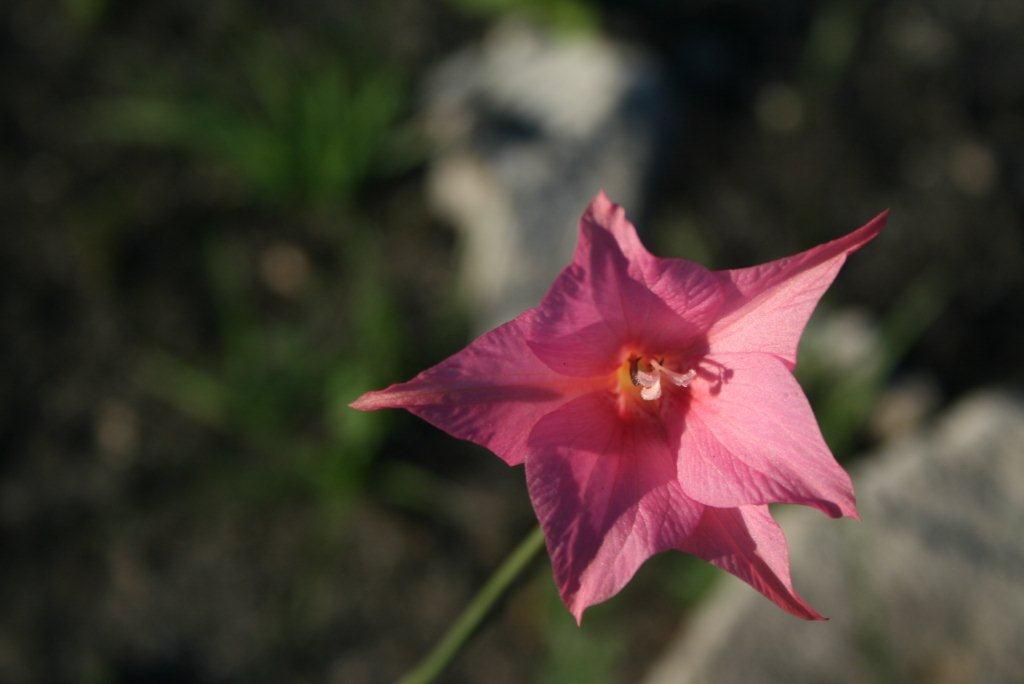
I was walking the Fynbos Trail on Flower Valley last week and came across these spectacular Gladiolus overbergensis in full flower. This rare Gladiolus is thought to be pollinated by sun birds and is retricted to the range of low mountains between Stanford and Gansbaai and is only seen flowering in the spring following a burn.

Gladiolus overbergensis on Fynbos Trail, Flower Valley

The only previous time I have seen this beauty was in spring following the massive wild fire of 2006 when it bloomed in profusion on the upper sandstone slopes of Grootbos and Flower Valley. Having made a spectacular appearance for one month it went dormant, awaiting the next fire. Below is a beautiful photo taken by  Heiner Lutzeyer in September 2006.

Gladiolus overbergensis on the Fynbos Trail

Posted in Ecology, What's flowering | Leave a comment

Fynbos Forum Innovation Scholarships

Dear all

Fynbos Forum Innovation Scholarships   FF_InnovationScholarship_Invitation for Applications_2013 FF_InnovationScholarship_Application Form_2013_Final

Please see the attached invitation to apply for the Fynbos Forum’s Innovation Scholarships as well as the application forms.  Note the deadline is 31 October 2012.

Many thanks

Karen Esler

Prof Karen J Esler

StellenboschUniversity

Department of Conservation Ecology & Entomology

Private Bag x1

Matieland

7602

South Africa

Physical: Room 3011, JS Marais Building, Victoria
St, Stellenbosch

Tel: +27 21 808 4005

Fax: +27 21 808 4821

Posted in Bursaries and job opportunities, News | Leave a comment

Interested infynbos restoration? Bursary Opportunities – closing date 15 October 2012

Are you interested in fynbos restoration and havea a Honours degree then take a look at this…..

bursary_advert BCA fynbos restoration

The DST-NRF Centre of Excellence for Invasion Biology (C·I·B) at Stellenbosch University is offering bursaries for two MSc students to participate in a large-scale restoration
study in lowland fynbos at Blaauwberg Nature Reserve.  See the attachment.

Regards

Dr Patricia Holmes

Posted in Bursaries and job opportunities | Leave a comment

Work integrated learning for Nature Conservation student

Dear all

Please see the attached SANBI nature conservation student application 082012 SANBI nature conservation student application 082012
advertisement and application form for a one year learning experience at
Kirstenbosch.


Warm regards

Elton le Roux

ER.leroux@sanbi.org.za

Posted in Bursaries and job opportunities, News | Leave a comment

Flower Valley blooming

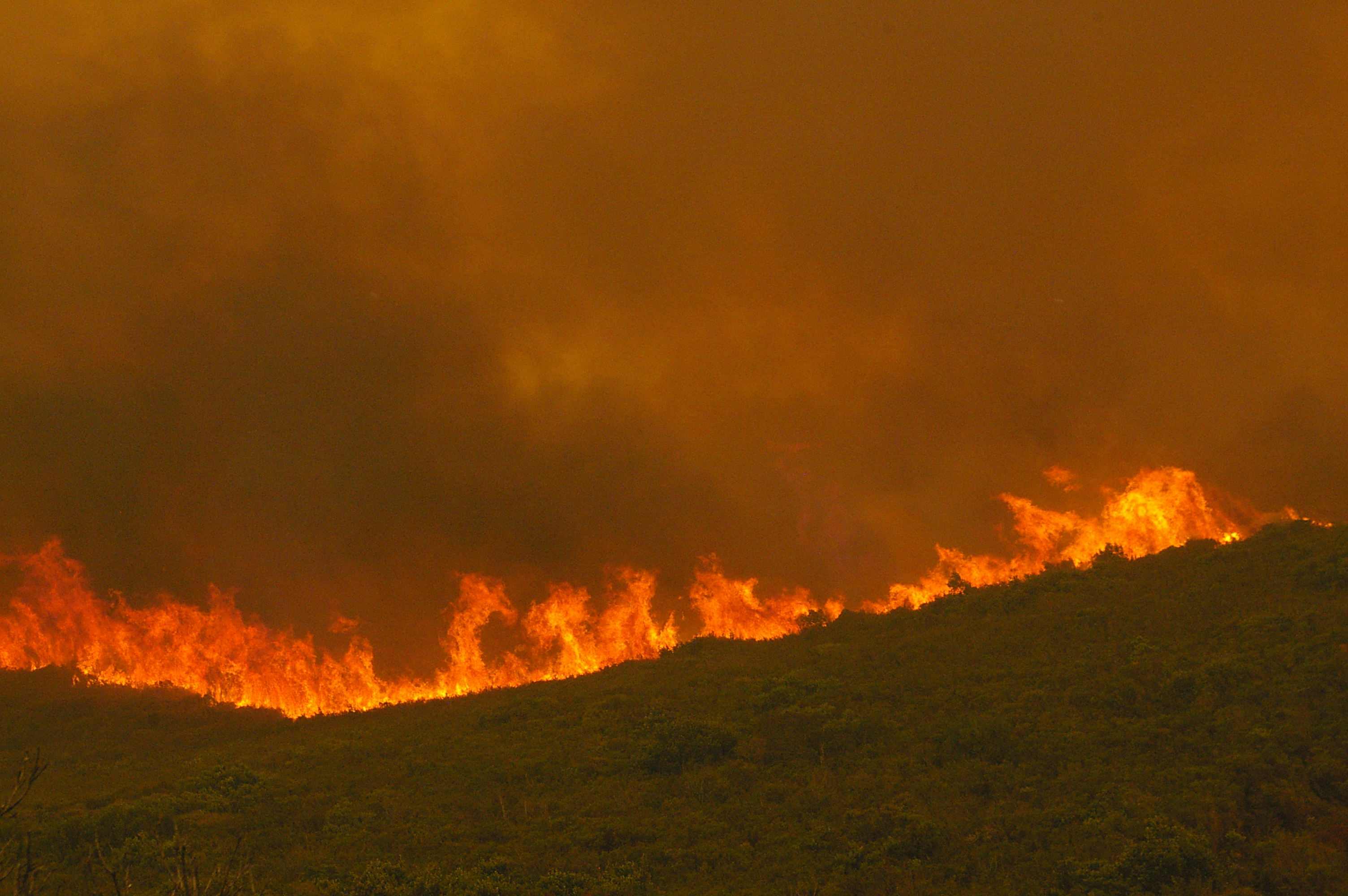
A few weeks ago a small controlled fire on Flower Valley (www.flowervalley.org.za) jumped a fire break and spread up the southern slopes of Grootberg. Fortunately with the aid of two helicopters (and some timeous light rain that started falling in the evening),  the fire was doused before it could spread too far across neighbouring flower farms. Over the past few weeks I have once again witnessed the amazing recovery of a fynbos landscape after fire. First a totally blackened slope, but within a few days the first grasses and bulbs start sprouting and within weeks the first flowers appear. Yesterday I walked up the burnt slope with my family and we saw all sorts of flowering treasures.

Grootberg on Flower vallet after fire

The slopes are once again turning green and many of the sprouting plants such as this Erica cerinthoides (fire heath) and Asparagus capensis (katdoring) have rapidly regrown from underground rootstocks and are already in full flower.

Asparagus capensis flowering on Flower Valley near GansbaaiErica cerinthoides flowering after fire on Flower Valley


The geophytes (bulbs) are also quick to respond following fire and we came across these magnificent Gladiolus meridionalis and Gladiolus brevifolius in full bloom.

Galdiolus meridionalis can be viewd on the Fynbos TrailGaldiolus brevifolius on the Fynbos Trail


Some of the other plants out flowering on the slopes of Grootberg enjoying their time in the sun include Oxalis paradilis, Oxalis luteola, Gerbera piloselloides (swarttee) and Empodium plicatum (ploegtydblommetjie). These are typical species that make use of the nutrient-enriched, post-fire soils and lack of competition from taller over-shadowing species early in the post-fire succession to flower and seed profusely.

oxalis paradilis on the Fynbos Trail


Gerbera piloselloides (swarttee) on Flower Valley


Empodium plicatum on the Fynbos trail


Finally, not to be out done, the serotinous species (store their seeds in their canopies), such as this dead Leucadendron xanthoconus, have released their seed bank from the safety of the cones in anticipation for cool June temperatures and rainfall – the natural cues for their germination.    It is these relatively slow reacting species, which are dependent on fire for seed germination, that will ultimately dominate this fynbos-clad landscape as it matures.

If you would like to visit Flower Valley, you can hike the Stinkhoutsbos Trail, a great route that includes fynbos and indigenous forest and cuts through this recently burnt area. For more information see www.flowervalley.org.za.

Posted in Conservation, Diversity, Ecology, Featured, What's flowering, where to see fynbos | Leave a comment

Invitation for managers and researchers to participate in Proteaceae focus at Fynbos Forum

Dear All

We would like to extend a formal invitation to you participate in the activities around the conservation, management and research on Proteaceae – one of the foci at this year’s Fynbos Forum.  Draft Programme FF2012 Proteaceae

The Fynbos Forum Committee, in collaboration with Stellenbosch University (Karen
Esler), Potsdam University (Frank Schurr) and SAEON (Nicky Allsopp) have been
awarded funding under the SA-Germany Bilateral Programme (SA-Germany Year of
Science Celebrations).  To this end, we will hold a workshop and special session entitled ‘Proteaceae: Research and Management Priorities in a Changing World” at the Forum (17- 20 July, Cape St Francis).  Please note that these activities are by no means limited to South African-German participants!

We hope to expose South African researchers, students, land managers, conservationists, NGOs and environmental educationists to ongoing research on South African Proteaceae by South African and international scientists.  The workshop will be facilitated in such a way that the implications for biodiversity management in the context of environmental change are highlighted.  In addition, land managers will be able to raise issues in
management that may guide further research. The special session on Proteaceae will
be held on Wednesday 18th June (see highlights in attached draft programme), and the workshop will take place at the conclusion of the meeting (Thursday 19th, PM). Our aim is to map the way forward for new research collaborations driven by needs expressed by the South African implementers of land management.

Many of you are planning to be at the Fynbos Forum this year, but we would like to extend this invitation to those who are still thinking about it.  We would love to have you participate in the special session and workshop.  We have attached the announcement and registration forms for your attention (note: the early bird registration cut-off is soon!).

We are sure that our e-mail list is by no means complete – please feel free to forward this invitation to those who may be interested.

Sincerely

Karen, Frank and Nicky

Prof Karen J Esler

Stellenbosch University

Department of Conservation Ecology & Entomology

Private Bag x1, Matieland, 7602, South Africa

Posted in Ecology, Events and conferences, News | Leave a comment

Fynbos Forum 2012 – Draft programme

Dear all

Fynbos Forum draft programme  Draft Programme FF2012 Final version 21 May corrected

The draft programme for the Fynbos Forum is attached.  If you had submitted an abstract to present a paper by the due date, your name should be included in the programme.
Please check this (and the spelling) and contact me if you have queries.

We had an enthusiastic response to our call for papers and workshops, with participants from all sectors in South Africa and overseas. There is a particularly interesting
session on Proteaceae: research and management priorities in a changing
world, which forms part of the South Africa – Germany year of science
celebration.

The Early Bird fee of R2600 (or R1900 for students) includes the conference fee as well as four nights’ accommodation at the Cape St Francis resort. Lunch and suppers are
included.  This offer will expire on the 1st June 2012, although you may
still register at a higher fee of R2900 per person from the 2nd of June.

Sandy Dowling

Fynbos Forum Secretariat

Tel. +27 21 783 2509

Cell: 084 896 7182

P O Box 48395, Kommetjie 7976, Western Cape, South
Africa

Posted in Events and conferences, News | Leave a comment

Fynbos identification workshop before Fynbos Forum in Cape St Francis

Dear Fynbos Forum Members

Fynbos ID workshop before Fynbos Forum in Cape St Francis  fynbos plant ID workshop Cape St Francis July 2012

I am running a Fynbos ID course before Fynbos Forum in Cape St Francis from 13-16 July at the same venue. Please let me know asap if you are keen to attend.  The details are attached.

Regards

Wendy Hitchcock

Environmental
Educator

Tel:
021-7123966

084-681
4385

e-mail:
hitchcock@mweb.co,za

Website:
www.ecoactivities.co.za

Posted in Events and conferences, News | 2 Comments

Diosma demissa – a species threatened!

Diosma demissa is a rare fynbos member of the Rutaceae (citrus) family that has a very interesting distribution. It grows only on coastal limestone ridges with two populations; one on the coast near Gansbaai and the second some 90km away across the South Atlantic on a short section of coastline in the Cape Point Nature Reserve.  This disjunct distribution, surely the consequence of shifting sea levels that has seperated a once continuous coastal population over time?

Diosma demissa growing on limestone at Gansbaai Diosma demissa has aromatic, lance shaped leaves that are alternately arranged on the stem. It is able to resprout after fire from a woody caudex and produces 2 to 3 flowers in clusters at the end of its stems from March to June. Diosma demissa - limestone fynbos Gansbaai

Unfortunately the main population of this species at Gansbaai is being severely impacted by the rapid development of the town as well as dense infestations of the invasive species, Acacia cyclops. These were planted along this section of coastline in the 1950’s to stabilise coastal dunes.  It is estimated that as much as 50% of the remaining natural populations of this species will be lost to alien vegetation and urban development over the next decade. Another example of a lowland fynbos species under severe threat!

Posted in Conservation, Diversity, What's flowering | Leave a comment

Its Erica time in the Overberg

A few year ago I spent some time with a Scottish visitor to the Cape who was proudly telling me about the two species of pink heather that flowered up on the mountains above his farm. It was May and we wondered up into the hills on Grootbos to see what was flowering – well we stopped, jumped out the landrover and took a few steps into a patch of mountain fynbos and saw all the Erica’s shown below……..

erica canescens on GrootbosErica canescens has small, cup-shaped, hairy pink flowers and grows in moist seeps and along rivers in the area from Malmesbury to Humansdorp. It flowers all year round.Erica cerinthoides - photographed Sean Privett for www.fynboshub.co.za


Erica cerinthoides (red flowers below) has the common name the fire heath. This is the best known and most widely distributed member of the Erica family in South Africa. It has a persistent rootstock allowing it to survive and resprout following fires, often flowering within a year of burning. If left unburnt it can grow up to 1.8m, but will stop flowering in the long-term absence of fire. The flowers are large, tubular, hairy and dark red. It grows on sandy flats and slopes from the Cederberg to Mpumalanga.

Erica coccinea on Grootbos Nature reserveErica coccinea is also a widespread and variable erica species. Both the red version shown on the right and the yellow version shown below grow on Grootbos. The red flowering on sandstone and the yellow flowering on limestone – speciation in progress!  This species  is pollinated primarily by sunbirds. It grows from Clanwilliam to George

Erica coccinea on Witkrans


Erica corifolia on www.fynboshub.co.za


Erica corifolia (right) has pink flowers and because of its all-year round flowering and wide distribution is very popular as a filler for fynbos flower bouquets. Erica corifolia is common on sandy flats and middle to upper sandstone flats from Malmesbury to De Hoop.


Erica discolor On Grootbos

One of  the most beautiful species flowering at the moment is Erica discolor. This is a dense, resproutingshrub with large, tubular pink to dark red flowers that have pale tips. It is bird pollinated and grows usually in drier habitats in sunny positions on coastal flats and lower mountains from Betty’s Bay to Humansdorp.


Erica linearis flowering in the Overberg


Erica plukenetii subsp. linearis (cats tail erica) is an erect, well-branched shrub with long, soft leaves giving the stems the appearance of a cats tail – hence the common name. This sub-species was up until recently categorised as its own erica species, but recent taxonomic re-classification has grouped it into the large Erica plukenetii complex.

It is popular with wild flower harvesters and grows on neutral to acidic soils between Gansbaai and Bredasdorp.


Erica nudiflora description on www.fynboshub.co.za


The small pink flowers of Erica nudiflora turn large tracts of hillside in the region bright pink in late summer and autumn. It is a common and widespread species in the south-western Cape and can be found growing on dry, stony slopes from the Cederberg southwards to the Cape Peninsula and eastwards to Bredasdorp.


Erica penicilliformis is commonly called the salt Salt and pepper ericaand pepper bush owing to the white and black flowers. The Latin name penicilliformis is derived from the likeness of its flowers to a pencil or artists brush. This is a very variable species that grows in different forms and flowers at different times of the year depending on where it occurs. It is a widespread species with a natural distribution from Clanwilliam to the Tsistikamma Mountains.


Erica pulchella flowering on Witvoetskloof

Erica pulchella is a very attractive, small shrub (pulchellus = beautiful in Latin) with its branches covered with bright purplish red flowers. The species occurs from the Cape Peninsula eastwards to Albertinia.


Erica vestita is mostly red in the Walker Bay regionErica vestita on Grootbos but as one travels inland towards Baardscheedersbos there is suddenly a transition to pink flowerered varieties. It is pollinated by sunbirds and is also visited by butterflies. It is a popular garden species that grows on both dry and moist habitats on the lower slopes of mountains between Worcester and George.

Needless to say my Scottish friend was impressed!

Posted in Diversity, What's flowering | 2 Comments